Puzzles
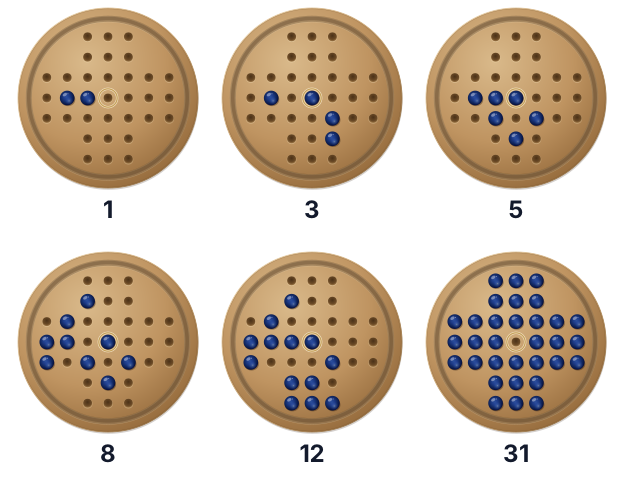
Choose a puzzle. Find the final marble.
A full game takes 13 to 43 jumps. The first puzzle takes one.
Most people meet peg solitaire as a wall: thirty-odd jumps, one wrong turn somewhere in the middle, and no idea where it went wrong. The puzzles are the other way in. Each one drops you into the last stretch of a solution on one of the six boards, starting with a position where a single jump finishes the job.
Stage by stage they get longer, until the sixth is the full opening, the whole game from its first jump. Then there is a seventh, a different full-board opening, for when you think you have a board figured out.
By then you will have seen the finish so many times that the last jump no longer surprises you, which is the whole idea.
How the puzzles are laid out
There are six boards and seven puzzles on each, 42 in all. Each board’s card shows the next puzzle you have not solved; the dots under it let you jump to any other. Nothing is locked, so you can skip ahead, go back, or start with the board you like best.
A solved puzzle earns a star, and the star is saved on this device. There are no accounts and no timer on screen.
How to practise
- Start at the first stage even if it looks too easy. It teaches you what the finish looks like.
- Always ask which two marbles must be left for the final jump. Then ask which jump could have left them there.
- Undo and hints are always there. When a stage feels easy, move on. When a full opening stops you, come back to the stage before it.
Questions people ask
Are the puzzles in order of difficulty?
Roughly. They go from short positions to the full opening on each board, but difficulty is a guide, not a measured score; some players find a short puzzle trickier than a long one.
Do I have to solve them in order?
No. Every puzzle is open from the start, and the dots under each board let you open any of them.
What does So close mean?
You finished with one marble, but not on the marked target. A puzzle is only solved when the last marble stops on the target.